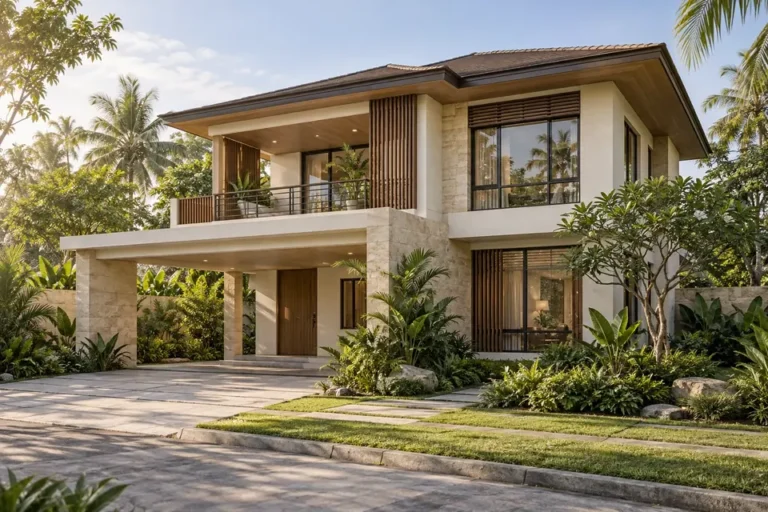


A swimming pool can transform a residential property, private villa, or resort into a more attractive and enjoyable space. Beyond recreation, a well-designed pool can become an important architectural feature that connects the building with its outdoor surroundings.
For homeowners, OFWs, resort developers, and property investors exploring pool construction in the Philippines, the process involves much more than excavating a hole, pouring concrete, and installing tiles.
A swimming pool is an engineered structure that must safely contain water while supporting appropriate circulation, filtration, waterproofing, drainage, electrical safety, and maintenance.
Poor planning can lead to expensive problems such as leaks, cracking, inefficient filtration, excessive maintenance, and unsafe conditions.
Whether you’re planning a compact backyard pool, family swimming pool, infinity-edge pool, or resort development, understanding the construction process can help you make informed decisions before starting.
Here are ten essential considerations for successful swimming pool construction.
What Is Swimming Pool Construction?
Swimming pool construction involves the planning, engineering, installation, and testing of a swimming pool and its supporting systems.
Depending on the project, the scope may include:
- Site assessment
- Pool design
- Structural engineering
- Excavation
- Reinforced-concrete construction
- Waterproofing
- Plumbing
- Filtration
- Electrical systems
- Pool finishing
- Decking
- Testing
- Turnover
The exact scope depends on the selected pool type, property conditions, and project requirements.
1. Determine the Pool’s Intended Use
Before choosing the pool shape or finish, determine how it will be used.
Possible applications include:
- Family recreation
- Children’s activities
- Exercise
- Private resort accommodation
- Villa amenities
- Hospitality developments
The intended use influences the pool’s dimensions, depth, access, safety provisions, and equipment requirements.
Family Swimming Pools
A residential pool may prioritize:
- Comfortable access
- Practical depth
- Seating ledges
- Safe circulation
- Easy maintenance
Resort Swimming Pools
Resort pools may require additional consideration for:
- Guest capacity
- Circulation
- Filtration
- Maintenance
- Safety
- Equipment access
The design should reflect actual operating requirements.
2. Evaluate the Property Before Finalizing the Pool Design
Pool construction should begin with understanding the site.
Important factors may include:
- Lot dimensions
- Property boundaries
- Terrain
- Soil conditions
- Existing structures
- Drainage
- Utility locations
- Construction access
Ocular Site Assessment
A site visit can help identify visible conditions that may influence excavation, equipment delivery, drainage, and pool placement.
Depending on the project, surveying, geotechnical investigation, or additional technical studies may be required.
Pool Placement
The pool should be positioned according to:
- Available space
- Sun exposure
- Privacy
- Building access
- Drainage
- Maintenance requirements
The pool should not interfere with existing foundations or underground utilities.
3. Choose the Appropriate Pool Type
Different pool types have different construction and maintenance requirements.
Reinforced-Concrete Swimming Pools
Reinforced-concrete pools offer flexibility in shape, depth, and layout.
They can be suitable for custom residential and resort projects.
However, they require proper structural design, waterproofing, and construction quality control.
Fiberglass Pools
Fiberglass pools are typically manufactured as prefabricated shells.
They may reduce certain on-site construction activities, but transportation, excavation, base preparation, installation, and utility connections remain necessary.
Vinyl-Liner Pools
Vinyl-liner systems use a waterproof liner supported by an appropriate structure.
They have different installation and maintenance requirements from reinforced-concrete pools.
The appropriate pool type depends on the project, budget, site conditions, and intended use.
4. Establish a Realistic Pool Construction Budget
Pool construction cost depends on more than the pool’s surface area.
Major cost factors may include:
- Pool dimensions
- Depth
- Structural requirements
- Soil conditions
- Excavation
- Waterproofing
- Finishing materials
- Filtration equipment
- Plumbing
- Electrical systems
- Decking
- Site access
Additional Cost Considerations
Depending on the project, additional expenses may include:
- Equipment room
- Water supply
- Drainage
- Landscaping
- Outdoor lighting
- Safety features
- Heating where applicable
A detailed estimate should be based on developed plans, equipment specifications, and the agreed scope.
5. Prioritize Proper Structural Engineering
A swimming pool is a water-retaining structure.
The structural design should consider the actual pool configuration, site conditions, and applicable loads.
Important components may include:
- Base slab
- Pool walls
- Reinforcement
- Structural joints
- Foundation support
Hydrostatic Pressure
Water creates pressure against the pool walls and base.
Depending on the site, groundwater and surrounding soil conditions may also influence the design.
The structure should be evaluated for relevant operating and construction conditions.
Reinforcement
Reinforcing steel should follow the approved structural design.
Bar sizes, spacing, concrete cover, and anchorage should not be determined through guesswork.
Concrete Quality
Concrete should meet the specified strength and durability requirements.
Proper placement, consolidation, curing, and quality control are important for long-term performance.
6. Waterproofing Is Critical
A swimming pool must retain water reliably.
Waterproofing should be planned as a complete system rather than relying only on tiles or grout.
Waterproofing Components
Depending on the system, waterproofing may involve:
- Proper concrete construction
- Joint detailing
- Waterstops
- Waterproofing membranes
- Penetration detailing
- Compatible finishes
Construction Joints
Joints between concrete pours require appropriate detailing.
Poorly executed joints can become potential leakage paths.
Pipe Penetrations
Plumbing penetrations through the pool shell should be properly detailed and sealed.
These areas require particular attention because leaks can be difficult to repair after finishing.
7. Plan Pool Plumbing and Filtration
A swimming pool requires a circulation and filtration system to maintain water quality.
Important components may include:
- Skimmers or overflow collection
- Main drains or suction outlets
- Return inlets
- Circulation pump
- Filter
- Valves
- Pipework
Pool Circulation
The circulation system should be designed according to the pool’s volume, intended use, and applicable requirements.
Poor circulation can contribute to uneven water treatment and maintenance difficulties.
Filtration
Common filtration options include:
- Sand filters
- Cartridge filters
- Other suitable systems
Equipment selection should consider flow requirements, maintenance, and operating costs.
Equipment Room
The pool equipment should be located where it can be accessed for maintenance.
The layout should consider ventilation, drainage, electrical safety, and noise.
8. Prioritize Electrical Safety
Swimming pools involve water and electrical equipment in close proximity.
Electrical design and installation should follow applicable safety requirements.
Important considerations may include:
- Proper grounding
- Equipotential bonding
- Suitable protective devices
- Appropriate equipment ratings
- Safe cable routing
- Pool lighting requirements
Underwater Lighting
Pool lighting should use equipment specifically suitable for underwater installation.
Electrical work should be performed by qualified personnel according to the approved design and applicable requirements.
Pumps and Equipment
Pool pumps and related electrical equipment should be installed according to manufacturer instructions and relevant electrical standards.
9. Choose Suitable Pool Finishes and Decking
Pool finishes influence appearance, comfort, durability, and maintenance.
Possible finishes include:
- Pool tiles
- Mosaic tiles
- Specialized pool coatings
- Other compatible finishing systems
Pool Tiles
Tiles should be suitable for continuous immersion and the intended pool conditions.
The adhesive, grout, waterproofing, and substrate should be compatible.
Pool Decking
Decking should consider:
- Slip resistance
- Drainage
- Heat exposure
- Maintenance
- Accessibility
A beautiful pool deck should remain practical and safe when wet.
10. Plan Testing, Turnover, and Maintenance
Pool construction should include appropriate testing before regular use.
Depending on the system, this may involve:
- Plumbing pressure testing
- Waterproofing checks
- Equipment commissioning
- Electrical safety verification
- Circulation testing
- Water treatment setup
Pool Maintenance
Routine maintenance may involve:
- Water testing
- Filtration
- Cleaning
- Chemical treatment
- Equipment inspection
- Leak monitoring
The owner should understand the maintenance requirements before turnover.
Residential Swimming Pool Construction
Residential pools can be designed for family recreation and outdoor living.
Possible features include:
- Entry steps
- Seating ledges
- Shallow areas
- Pool lighting
- Adjacent patio
- Landscaped surroundings
The design should respond to the property’s actual dimensions and intended users.
Small Swimming Pool Construction
Compact pools can be considered for properties with limited outdoor space.
Possible concepts include:
- Plunge pools
- Courtyard pools
- Narrow lap-style pools
- Small recreational pools
However, compact pools still require proper structure, filtration, plumbing, and electrical safety.
Infinity Pool Construction
Infinity-edge pools create the visual effect of water extending beyond one or more pool edges.
They generally require additional components such as:
- Overflow edge
- Collection channel
- Balance tank
- Circulation system
- Structural detailing
These features can increase construction complexity and cost.
Resort Swimming Pool Construction
Resort pools should be planned according to expected guest use and operating requirements.
Important considerations include:
- Pool capacity
- Access
- Filtration
- Water treatment
- Safety
- Maintenance
- Equipment redundancy where appropriate
Applicable regulatory requirements should be evaluated during design.
Pool Construction on Sloping Land
Sloping properties may allow attractive elevated pool designs.
However, additional engineering may be required for:
- Structural support
- Retaining structures
- Soil conditions
- Drainage
- Access
- Waterproofing
The pool should be designed according to the actual site.
Pool Construction With a House
Planning the pool together with the house can improve coordination.
Important considerations include:
- Building placement
- Foundation clearances
- Plumbing
- Electrical systems
- Drainage
- Outdoor circulation
- Landscaping
Early planning can reduce conflicts between the pool and other property features.
Pool Renovation and Rehabilitation
Existing pools may require:
- Tile replacement
- Waterproofing repairs
- Plumbing repairs
- Filtration upgrades
- Lighting replacement
- Structural assessment
The appropriate repair method depends on the actual condition.
Leaks should be investigated before applying cosmetic finishes.
Pool Construction Cost in the Philippines
The cost depends on the pool’s dimensions, depth, structure, site conditions, equipment, finishes, and supporting works.
A complete estimate should include the pool shell, waterproofing, plumbing, filtration, electrical systems, finishing, and other agreed items.
An advertised price based only on pool dimensions may not represent the total installed cost.
How Long Does Pool Construction Take?
Construction duration depends on:
- Pool size
- Structural design
- Site conditions
- Weather
- Material availability
- Equipment procurement
- Testing requirements
The contractor should provide a project-specific schedule rather than assuming every pool can be completed within the same period.
Does Pool Construction Require a Permit?
Permit and approval requirements depend on the project’s location, scope, intended use, and applicable regulations.
Structural and technical documentation may be required.
Commercial or resort pools may also be subject to additional health, safety, and operating requirements.
Design and Build for Swimming Pools
A Design and Build arrangement can coordinate pool planning, engineering, construction, and supporting systems.
A typical process may include:
- Initial consultation
- Ocular site assessment
- Pool concept and layout
- Structural and technical design
- Cost estimation
- Permit assistance
- Excavation and structural construction
- Waterproofing
- Plumbing and electrical installation
- Finishing
- Testing and commissioning
- Turnover
The exact scope depends on the project agreement.
Frequently Asked Questions
How much does pool construction cost in the Philippines?
Cost depends on pool size, depth, structural requirements, site conditions, waterproofing, filtration, electrical systems, and finishes.
Is a concrete pool better than a fiberglass pool?
Both can be suitable. Reinforced-concrete pools offer greater design flexibility, while fiberglass pools use prefabricated shells. The better option depends on the project.
Can I build a swimming pool on a small lot?
Potentially, depending on available space, setbacks, access, structural requirements, and applicable regulations.
Do swimming pools require waterproofing?
Yes, the pool must use an appropriate water-retaining and waterproofing system. Tiles and grout alone should not be relied upon to prevent leakage.
Can a swimming pool be built together with a new house?
Yes. Coordinated planning can help integrate the pool with the building, utilities, drainage, and outdoor spaces.
Common Pool Construction Mistakes to Avoid
Before starting a pool project, avoid these problems:
- Designing without evaluating the site
- Underestimating excavation costs
- Ignoring structural engineering
- Poor construction-joint detailing
- Inadequate waterproofing
- Improper plumbing design
- Undersized filtration equipment
- Ignoring electrical safety
- Choosing unsuitable pool finishes
- Failing to plan maintenance
A successful swimming pool begins with proper engineering and construction planning.
Planning Pool Construction in the Philippines?
Whether you’re planning a small backyard pool, family swimming pool, infinity-edge pool, private villa pool, resort pool, or swimming pool integrated with a new house, the project should balance architectural design, structural safety, waterproofing, filtration, electrical systems, and maintenance.
Nillasca Construction, based in Santa Cruz, Laguna, can assist with consultation, ocular site assessment, architectural and engineering coordination, construction cost estimation, permit assistance, pool-related structural and site development works, and construction coordination, depending on the agreed project scope and location.
Specialized pool equipment, filtration design, commissioning, and maintenance arrangements should be confirmed as part of the project scope.
A beautiful swimming pool is more than a water-filled structure. It is a carefully engineered system where structural design, waterproofing, circulation, filtration, safety, and workmanship must work together for lasting performance.
Nillasca Construction — Crafting Your Vision Into Reality.