
PV Solar Installation in Laguna & CALABARZON
Rooftop solar for homes, apartments and businesses—planned around your electricity use, roof condition and backup priorities.
For solar inquiries, choose “Other” as the project type and mention “Solar installation” in your message.
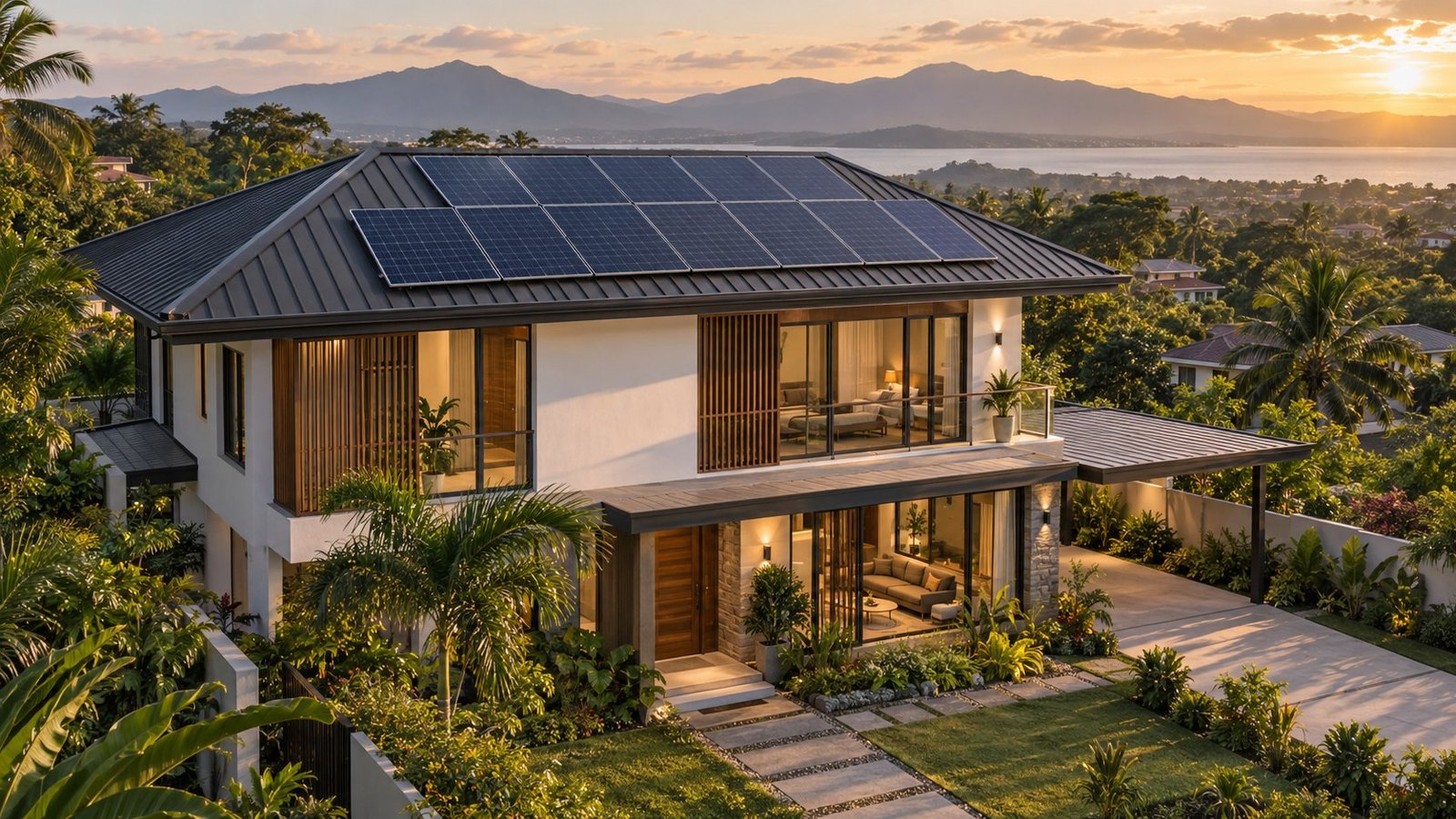
Solar computation area
Explore a preliminary panel size, daytime energy savings and optional battery backup. Palitan ang sample values gamit ang actual consumption sa electric bill mo.
Illustrative estimate, not a quotation or output guarantee. All starting values are examples, including the rates and sunlight assumption. This 30-day monthly model assumes solar and daytime loads coincide; actual hourly matching, shade, seasons and equipment limits can reduce results. Battery shifting is excluded from savings.
The calculator is loading. If it does not appear, enable JavaScript or request a solar assessment.
Start the conversation with numbers
- Potential generation / month
- Modeled daytime solar use / month
- Daytime energy savings / month
- Remaining grid energy / month
- Potential surplus / month
- Potential export credits / month
Assumes a fully charged battery and no solar input during backup. Excludes aging and reserve margins. Inverter power, surge capability and safe utility isolation require separate design.
Potential surplus may be curtailed without an approved export arrangement. These figures exclude fixed fees, taxes not captured in your rate, maintenance and equipment costs. They do not predict your final utility bill.
Discuss this estimate →Choose “Other” and mention solar installation in the inquiry form.How the computation works
Monthly yield per kWp = peak sun hours × performance factor × 30 days. Target PV size = monthly consumption × generation target ÷ monthly yield; the array is rounded up to whole panels. Potential generation = rounded array kWp × monthly yield.
Modeled daytime solar use = the smaller of potential generation and daytime consumption. Daytime savings = modeled daytime solar use × avoided energy rate. Potential surplus = generation minus modeled daytime use; export credits use the separate rate only when the net-metering scenario is selected. Monthly matching can overstate real self-consumption because generation and loads vary by hour.
Nominal battery kWh = average load in kW × backup hours ÷ usable fraction ÷ battery-to-load efficiency. This separate backup calculation does not increase the solar savings estimate. Confirm export credit rules and backup requirements with your utility.
Solar installation that fits your property
Solar photovoltaic panels convert sunlight into electricity. An inverter converts their DC output into AC power that suitable household and business circuits can use.
A useful proposal starts with your electricity consumption, not simply the number of panels that can fit on the roof. A home occupied during the day, a rental property and a workshop can have very different energy profiles—even when their monthly bills look similar.
For an existing property, discuss the condition of the roof and electrical installation before choosing equipment. For a new build or renovation, solar provision can be coordinated with roof design, conduit routes, distribution boards and space for future battery equipment. Explore our design-and-build services in Laguna if solar is part of a larger construction project.
On-grid, hybrid or off-grid solar?
The best configuration depends on whether your priority is daytime bill reduction, backup for essential loads or power at a property without a dependable grid connection.
Use solar during the day
A grid-connected system supplies suitable loads while sunlight is available. The utility supplies the balance when solar production is lower than demand.
- Consider when daytime consumption is substantial.
- Battery storage is not automatically included.
- Export arrangements must be coordinated with the utility.
Combine solar and storage
A compatible hybrid inverter and battery can support energy storage and selected backup circuits, depending on the design and operating mode.
- Define essential loads and desired backup duration.
- Check battery capacity, inverter output and compatibility.
- Include appropriate isolation and protection.
Plan for independent supply
An off-grid system must meet the property’s required loads without relying on the utility as its normal energy source.
- Assess night-time use and prolonged cloudy conditions.
- Storage and possible alternative backup need careful sizing.
- Energy management is part of the design.
| Your priority | Option to assess | Key question |
|---|---|---|
| Reduce electricity imported during daylight | On-grid or hybrid | How much of the solar output can you use as it is generated? |
| Keep essential circuits operating during an outage | Hybrid with suitable battery backup | Which loads, at what combined power, and for how many hours? |
| Supply a remote property | Off-grid or a carefully planned alternative | How will the system cover low-sun periods and peak demand? |
Panels alone do not guarantee brownout power. A standard grid-tied system normally stops supplying power when the grid fails. Backup needs a suitable system and separation from the utility network. See Meralco’s battery and outage guidance.
Solar installation cost: what changes the quotation?
People often search for a 3kW, 5kW or 10kW solar system price in the Philippines. These are useful starting points, but package labels alone do not tell you what is included. Compare panel capacity in kWp, inverter output in kW, battery storage in kWh, and the actual installation scope.
| PV array example | Discussion starting point | Still needs checking |
|---|---|---|
| About 3kWp | A smaller rooftop or a modest daytime energy requirement. | Measured loads, shade, usable roof area and equipment ratings. |
| About 5kWp | A broader residential or small-business requirement. | Consumption timing, export limits and any battery provision. |
| About 10kWp | A larger home or business with substantial daytime use. | Electrical service, peak demand, structural review and utility coordination. |
These capacities are examples, not recommendations or fixed packages. They do not guarantee a particular number of appliances, monthly output or bill saving. Nillasca’s quotation follows the assessed property and agreed scope.
Equipment & storage
Panel and inverter specifications, battery capacity, monitoring, protections, product support and future expansion provisions affect the price.
Roof & access
Roof type and condition, mounting requirements, height, safe access, waterproofing details and any necessary strengthening influence installation work.
Electrical & approvals
Cable routes, distribution-board work, protection, metering arrangements, documentation and applicable utility or LGU requirements must be identified.
Ask for an itemised comparison
A clear quotation identifies equipment models and ratings, mounting and electrical work, battery inclusion or exclusion, monitoring, documentation assistance, applicable fees, commissioning, warranty terms and after-sales scope. Check whether roof repairs, structural strengthening, trenching, electrical upgrades and utility charges are included or priced separately.
For savings or payback estimates, ask for the assumptions: expected generation, daytime self-consumption, export credits, tariff, seasonal variation, maintenance and possible equipment replacement. No universal zero-bill or fixed-payback promise applies to every property.
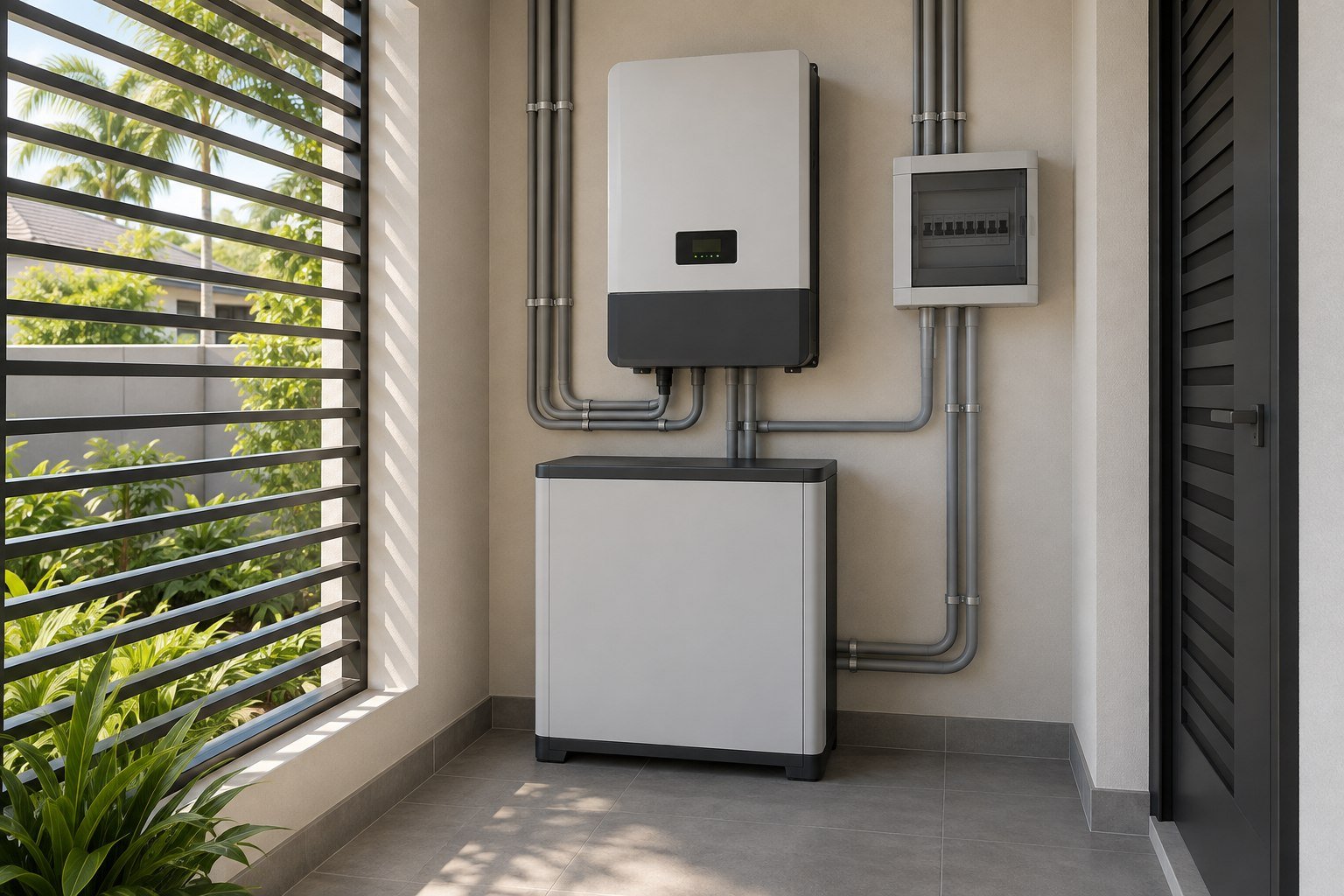
Hybrid solar and battery backup
Begin with the circuits you want to keep running: for example, selected lighting, communications and refrigeration. Air-conditioning, pumps and other high-demand equipment need separate consideration because starting demand and simultaneous use can change the required system.
Battery kWh describes stored energy; inverter kW describes power capability. Backup duration also depends on usable battery capacity, discharge limits, conversion losses, battery condition and the loads operating at the time.
Provide a list of essential appliances, their ratings where available, and the hours of backup you need. Include a suitable dry equipment location, ventilation, service clearances and manufacturer requirements in the assessment.
Utility isolation and protective arrangements must be designed correctly. A battery-ready label or hybrid inverter alone does not confirm that every circuit will operate during a brownout.
Commercial rooftop solar in Laguna
Offices, workshops, shops and other businesses with daytime activity may be suitable for rooftop PV assessment. Review operating hours, seasonal consumption, peak demand, equipment start-up and any planned expansion.
For apartments and mixed-use buildings, identify the meter and loads the proposed system will serve. Tenant arrangements, roof access and responsibility for maintenance should be settled before installation. A shared roof does not automatically create shared bill credits across separate accounts.
Roof penetrations, drainage, equipment access, maintenance paths and the existing building condition matter as much as the panel layout. If roof renewal or building works are needed, coordinate them before placing the solar array.
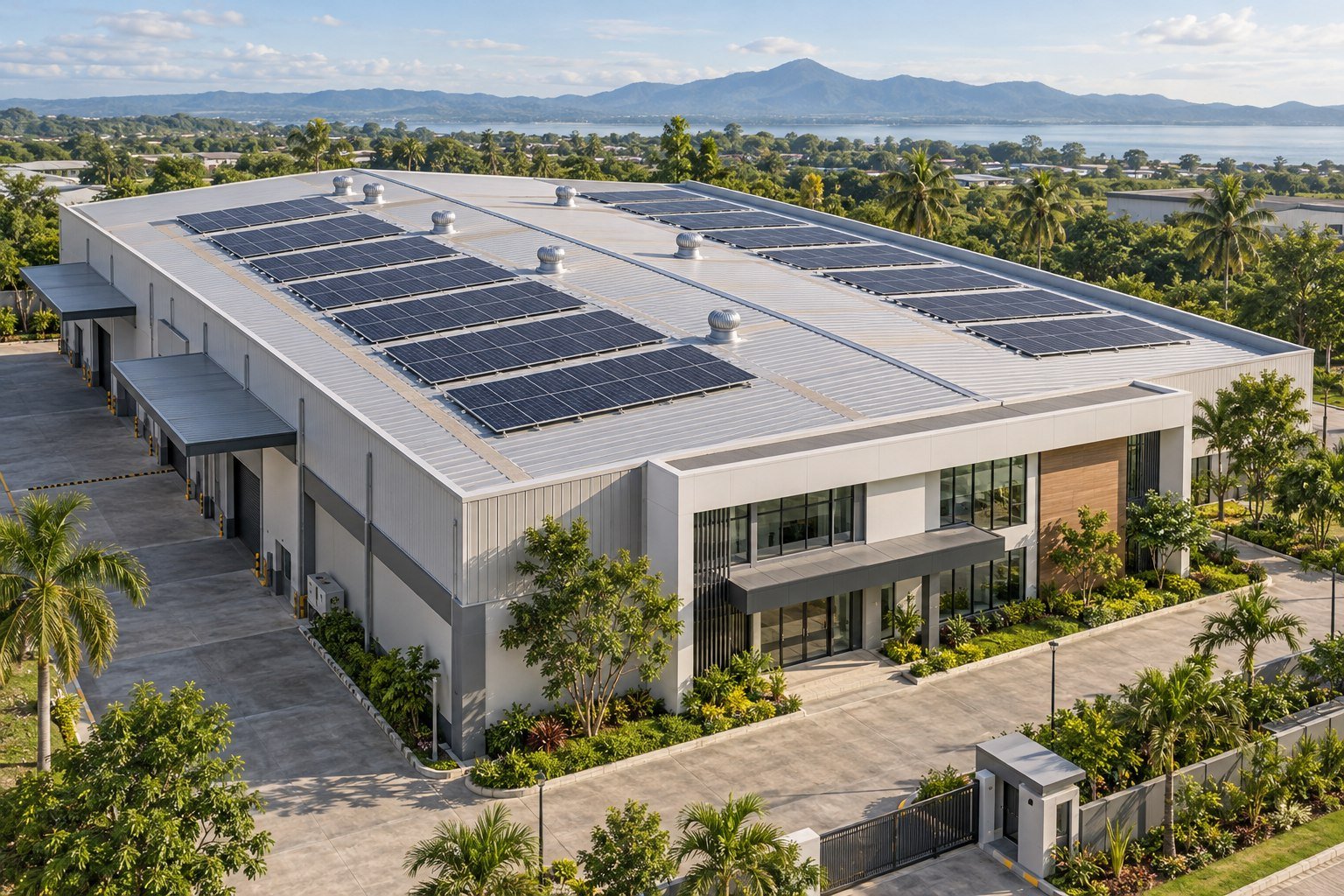
Net-metering and zero-export solar
With an approved net-metering arrangement, eligible consumers can use their solar electricity and receive bill credits for qualifying excess electricity exported to the grid. For Meralco customers, export credits use the applicable generation-charge basis rather than the full retail electricity rate. Solar self-consumption and exported energy therefore have different effects on your bill. Read Meralco’s explanation of net-metering credits.
A zero-export system is configured to prevent electricity from being exported. It is not the same as an off-grid system, and it does not automatically include battery backup. Utility notification, technical compliance and the appropriate registration process still need review. The DOE’s August 2026 own-use solar update makes this a timely topic to discuss when choosing a system.
What to prepare for the application discussion
- Electricity account and applicant details, with ownership or authorisation clarified.
- System and equipment information requested by the distribution utility.
- Required electrical plans, inspections and LGU documentation for the project.
- Applicable agreements, fees, metering work and commissioning requirements.
Meralco’s current process includes its application form, relevant inspection and agreement requirements, and any additional documents applicable to the installation. Use the current official application checklist rather than an old generic list. Other distribution utilities may have different procedures.
Confirm assistance in the written scope. Ask which plans, submissions, inspections and utility coordination are included. Approval, export permission, fees and processing schedules remain subject to the relevant authorities and utility. Do not assume an installed system is already authorised to export.
Our PV solar installation process
Share your project brief
Send the location, property type, monthly consumption and whether your main goal is daytime savings, backup or both.
Assess the roof and electrical supply
Review usable roof space, shade, condition, access, electrical service and equipment locations. Identify further professional checks required.
Agree the system and quotation
Compare a proposed layout, equipment ratings, backup scope, estimated performance assumptions, inclusions and exclusions.
Coordinate design and requirements
Organise the appropriate electrical and structural coordination, utility arrangements and project documentation included in the scope.
Install, test and commission
Carry out the agreed mounting and electrical works, protection checks and commissioning. Utility export starts only through the applicable approved process.
Handover and ongoing care
Review operating instructions, monitoring access, essential-load limitations, equipment records, warranties and maintenance responsibilities.
The schedule is confirmed after the assessment and requirements review. Roof repairs, equipment availability, utility work or additional approvals can affect the sequence.
What we need from you
- Location: city or municipality, barangay and property access details.
- Electricity use: recent monthly kWh figures, ideally several months, and your utility provider.
- Property information: house, apartment or business; existing building or new construction.
- Roof details: photos, roofing material, approximate age, known leaks and drawings if available.
- Usage pattern: daytime activity, night-time loads and expected future appliances.
- Backup needs: essential loads and the duration you want to discuss.
- Project constraints: budget range, target schedule and owner, HOA or subdivision requirements.
A practical first message
“Solar inquiry for [barangay, city]. Our property is a [home/business] using about [monthly kWh]. We want [daytime savings / essential-load backup / both]. Our roof is [type/condition], and our target schedule is [month].”
If sharing a bill for the initial review, you can cover account identifiers that are not needed to explain consumption. Roof photos can be taken safely from the ground.
Send your solar brief →Roof care, monitoring and maintenance
Keep equipment records, commissioning results and warranty documents together. Discuss monitoring of generation and alarms, safe visual checks, cleaning needs, roof access and how to report faults. Production can vary with weather, shade and seasonal conditions; an unexpected sustained change deserves review.
Ask separately about panel product warranties, panel performance terms, inverter and battery coverage, and installation workmanship. Their conditions and claim procedures differ. Confirm the exact warranty documents and maintenance arrangement in your quotation and handover package.
Electrical work, roof access and isolation procedures should be handled by appropriately qualified personnel. Avoid treating a concept image or online package layout as a construction or wiring instruction.
Solar installation inquiries across CALABARZON
Nillasca Construction welcomes PV solar installation inquiries in Laguna, including Santa Cruz, Pila, Pagsanjan, Los Baños, Calamba, Cabuyao, Santa Rosa, Biñan and San Pablo. We also review proposed projects in Cavite, Batangas, Rizal and Quezon based on location, access, scope and team availability.
Send the exact project location so we can confirm assessment arrangements and service availability. These service areas do not represent separate branch offices. For broader building work, see our house construction and renovation services.
PV solar installation FAQs
How much does solar installation cost in Laguna?
The price depends on the assessed PV capacity, inverter, battery provision, roof and electrical work, access and documentation scope. Share your consumption and property details for an itemised quotation. Comparing panel wattage alone can hide major differences in the installation.
Is a 5kW solar system enough for my house?
It cannot be decided from the house size or monthly peso bill alone. Review daytime kWh use, peak loads, roof conditions and the proposed inverter rating. A 5kWp panel array and a 5kW inverter are related but different specifications.
Will solar panels work during a brownout?
A standard grid-tied system normally shuts down when the grid fails. A properly configured backup system can support selected loads with suitable storage and isolation. Confirm exactly which circuits will be supported and their operating limits.
Do I need a battery or net-metering?
They serve different purposes. A battery stores energy and may support backup; approved net-metering credits qualifying electricity exported to the grid. Either, both or another configuration may be appropriate after reviewing your consumption and utility requirements.
Does zero-export mean I am off-grid?
No. A zero-export system can remain connected to the utility while preventing export. Off-grid describes a different supply arrangement. Ask about the operating mode, required registration and backup capability separately.
Will solar eliminate my electricity bill?
That is not guaranteed. Consumption timing, system output, weather, export arrangements and applicable charges affect the result. A useful proposal states its savings assumptions instead of promising every household a zero bill.
Can solar be installed on an existing metal roof?
It may be suitable after checking roof condition, structure, mounting compatibility, weatherproofing and safe access. Existing leaks, deterioration or structural concerns should be addressed in the assessment before equipment is installed.
How long will installation and approval take?
The project schedule depends on system scope, building readiness, equipment availability and utility or LGU processes. Installation completion and approval to export are different milestones; both should be clearly explained in the proposed schedule.
Can I add solar to a new house or renovation?
Yes, solar requirements can be discussed during building planning. Early coordination helps reserve roof areas, electrical routes, equipment space and future battery provision. The final design still needs a property-specific load and technical assessment.
Are these images completed Nillasca solar projects?
No. The three images on this page are concept renders created to illustrate residential rooftop solar, hybrid equipment and commercial rooftop planning. They are not evidence of completed projects or installation drawings.
Ready to discuss rooftop solar?
Tell us where you want to install, how much electricity you use and whether you need battery backup. We will review the brief and discuss the assessment, scope and quotation process.
For solar inquiries, select “Other” in the inquiry form and describe your solar requirements.
Nillasca Construction · Santa Cruz, Laguna · Project availability confirmed after review.