

A promising student housing location needs evidence of tenants who can afford and want the proposed rooms, not just a nearby university. Before buying a lot or fixing the unit count, check the campus actually served, competing accommodation, travel routes, local approvals and the cost of operating the property.
If you are searching for the “highest demand areas for student housing in the Philippines in 2026,” start by defining the evidence needed for that comparison. The official campus housing sources reviewed here confirm existing accommodation, but they do not establish a national ranking of unmet demand, current vacancies or achievable rents. Use the following checks to investigate a particular site.
Study a campus catchment, not an entire city
Identify the campus and the buildings students actually visit. Ask whether the intended residents attend in person, how often they travel, and which gates and transport routes they use. Walk or test the journey at relevant hours; a straight-line map distance can hide an inconvenient gate, crossing or evening route.
In Los Baños, for example, UPLB’s official student-housing page identifies university-managed residence halls. In Dasmariñas, DLSU-D’s on-campus housing page describes its own dormitory provision. These campus locations are starting points for research, not proof that another building will fill. Include campus-operated accommodation in your supply review alongside private properties.
Collect evidence of demand and competing supply
| Question | Evidence to collect |
|---|---|
| Who would rent here? | Interviews with prospective residents and, where appropriate, parents; preferred room type and realistic total budget |
| What already exists? | A dated list of nearby dormitories, boarding houses and apartments, including on-campus options |
| What do tenants actually pay? | Comparable room or bed-space offers with inclusions, deposits, utilities and lease length recorded |
| Is advertised space occupied? | Recent availability checks and information volunteered by operators; distinguish asking rents from actual agreements |
| Does the academic calendar matter? | Official term dates and the proposed lease policy for breaks, internships or other time away |
| Is more supply coming? | Observable building activity and verified announcements, rather than rumours or duplicate online listings |
Keep the date, source and room type beside each observation. A price per bed cannot be compared directly with a whole apartment rent. Likewise, an old social-media advertisement does not prove that the room is still available or that it achieved the advertised price.
For a more useful small survey, use the same questions for each property: walking route to campus, number of occupants allowed, private or shared bathroom, furniture, internet, utility billing, security arrangements and lease period. Record unknowns rather than filling the gaps with assumptions.
Compare locations with an evidence sheet
Make one page for each shortlisted lot. Put tenant needs, travel route, competing supply, verified asking rents, site constraints, approval questions and construction access side by side. Mark every item as documented, observed or still unverified. This makes a nearby but constrained lot easier to compare with one that is farther away but better suited to the intended residents.
Avoid assigning a “high demand” label based only on university enrollment. Not every student needs off-campus accommodation, and a large campus may already have substantial housing provision. A location decision should explain why your particular offer would meet an identified need at a supportable price.
Check whether the lot can support the intended use
Ask the local planning or zoning office and Office of the Building Official how the proposed use will be classified and what approvals apply. Describe the actual arrangement: self-contained apartments, shared rooms, a boarding house or another form of accommodation. Do not assume that calling a proposal an apartment resolves its regulatory classification.
Before fixing the rentable area, have the design team review access, circulation, services, fire safety, sanitation and other applicable requirements. The National Building Code regulates building use and occupancy as well as construction. Bring the intended tenant arrangement to the local review rather than attempting to maximise beds first and address approvals later.
Translate tenant needs into a building brief
- Choose whether the offer is per bed, per room or per apartment, and make the intended occupancy clear to the designer.
- Define study space, storage, internet provision and how ordinary maintenance will be handled.
- Plan the relationship between private rooms, shared facilities and management areas.
- Set out access and visitor policies, without relying on equipment alone to resolve operational issues.
- Discuss utility metering or billing, cleaning responsibilities and waste collection.
- Identify the owner’s staffing, repair and management responsibilities after turnover.
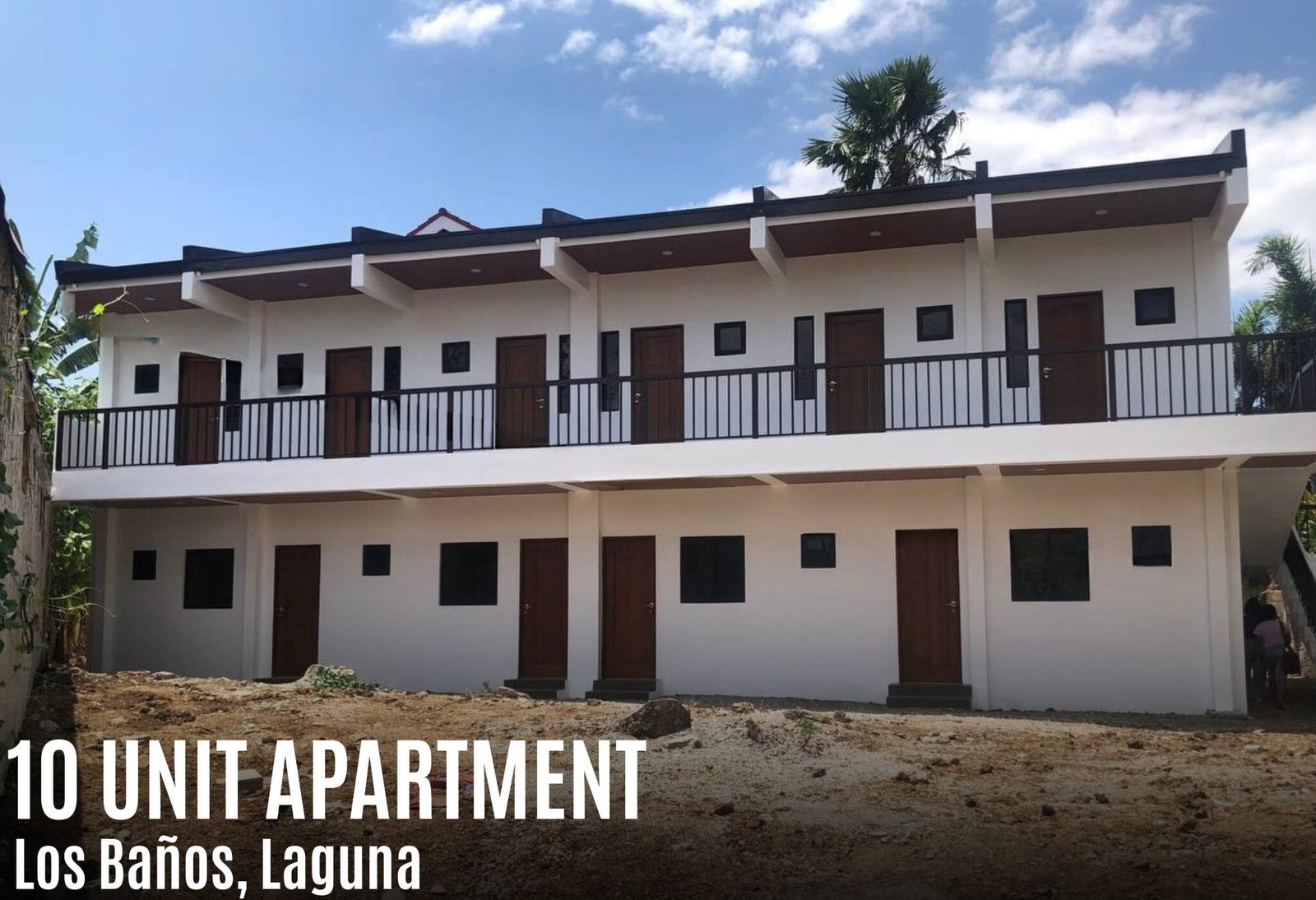
The layout should respond to this brief and the reviewed site constraints. Our apartment-building planning guide covers the wider construction discussion. You can also view photographs of Nillasca’s completed 10-unit apartment project in Los Baños as a building reference. That project page does not establish student tenancy, occupancy rates or investment returns.
Test the operating plan before the construction commitment
Prepare a cash-flow assessment with your financial adviser using clearly labelled assumptions for occupied months, collection, repairs, management, utilities paid by the owner, financing and other costs. Test weaker occupancy and later opening scenarios. A design with more beds does not automatically produce a better operating result.
Keep feasibility work separate from a construction quotation. The quotation prices the agreed building scope; it does not certify future rental demand. For borrowing questions connected to a business building, discuss the actual use with the bank and read our commercial construction financing preparation guide.
Frequently asked questions
Which Philippine city has the highest demand for student housing?
The sources reviewed for this guide do not establish a comparable national ranking. Assess a defined campus catchment using current supply, availability, affordability and tenant evidence.
Is a lot near UPLB automatically a good dormitory site?
No. Confirm the route students use, competing accommodation, permitted use, site constraints and a realistic operating plan. Proximity is one input to the decision.
Should I build bed spaces or self-contained apartments?
Base the brief on verified tenant preferences, affordability, management capacity, site conditions and the local classification of the intended use. Review the options before selecting the unit count.
Can a contractor guarantee occupancy or rental income?
A construction engagement defines building work. Future occupancy and income depend on the market and operation of the property and should not be treated as guaranteed by a construction quotation.
Turn your apartment idea into a clearer building brief
For a proposed apartment development in Laguna, share the location, lot information, intended room type and available research. Nillasca can review the construction scope and next planning steps for the property.
Research checked on 24 November 2026. Official records, product requirements and local approvals can change; check the linked source for the project you are assessing.
[…] student accommodation? Start with our student housing location checklist to research campus access, competing supply, affordability and site approvals before fixing the […]